Shrink-Wrapped and Sold Short: What Supermarkets Did to Your Bacon
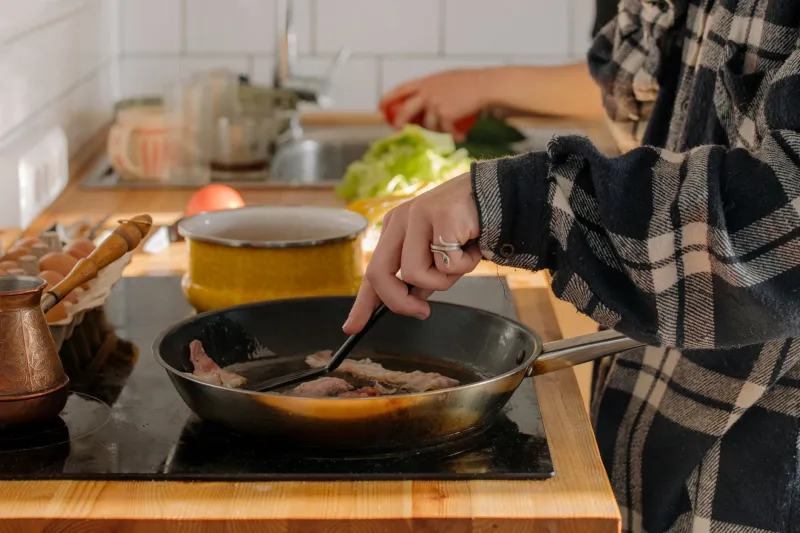
There's a moment — and if you've experienced it, you'll know exactly what we mean — when you lay a supermarket rasher in a hot pan and it immediately begins to weep. Not sizzle. Not spit. Weep. A thin, grey-white liquid seeps out from under the meat, fills the pan, and within thirty seconds you're essentially poaching bacon in its own watery misery. The strip shrinks by a third. The edges curl up like they're trying to escape. And what you're left with, after all that drama, is a limp, pale afterthought that wouldn't carry a slice of toast, let alone anchor a proper British breakfast.
This is what passes for bacon in most British households today. And we've been putting up with it for decades.
What Bacon Actually Is — Or Was
Let's start with the basics, because somewhere along the line, the basics got buried under a pile of modified atmosphere packaging and marketing copy about "smoky flavour notes."
Traditional British back bacon comes from the loin and a bit of the belly — that distinctive shape, the eye of lean meat with a strip of fat along the top, is uniquely ours. The cure was the magic: salt, sometimes sugar, sometimes saltpetre, applied either as a dry rub or a wet brine, and left to do its work over several days. This wasn't just about preservation. The cure transformed the meat. It drew out moisture, concentrated flavour, firmed up the texture, and gave the rasher that characteristic depth — that slightly salty, slightly sweet, unmistakably bacony quality that you don't get anywhere else in the world.
A proper cured rasher from a decent butcher hits the pan and sings. It crisps at the edges. The fat renders down golden. The meat stays firm enough to actually bite through without disintegrating. It smells, frankly, like everything is going to be alright.
"The cure is the flavour," says Pete Alderton, who runs a small traditional curing operation out of a unit in rural Shropshire. "Take that away — or rush it — and you've just got a bit of pork that's been near some salt. It's not the same animal."
The Supermarket Effect
So what went wrong? The short answer is scale, speed, and the relentless pressure on price-per-kilo that has defined British food retail since the 1970s.
Modern supermarket bacon is produced at a volume that makes traditional dry-curing essentially impossible. To cure properly, you need time — days, sometimes more than a week. Time costs money. Warehouse space costs money. So the industry shifted to injecting brine directly into the meat, a process that takes hours rather than days and adds significant water weight to the product. More water means more weight. More weight means more money per pack at the same price point. The retailer wins. The producer survives. The pig, and everyone eating it, loses.
The labelling laws don't help matters. "Cured" on a packet of supermarket bacon tells you precisely nothing. It doesn't tell you how it was cured, for how long, or with what. It doesn't distinguish between a rasher that spent a week in a dry salt cure and one that was pumped full of brine on a Tuesday morning and sliced by Thursday afternoon. Both are technically "cured." Only one of them tastes like bacon.
Thickness is another casualty. Traditional rashers were cut to a proper width — substantial enough to have some presence on the plate, thick enough to develop a bit of crust without drying out entirely. Supermarket bacon is sliced to a uniform thinness that prioritises the number of rashers per pack over any culinary consideration. You get more rashers. They're just not worth eating.
The Butcher's Counter: Still Fighting
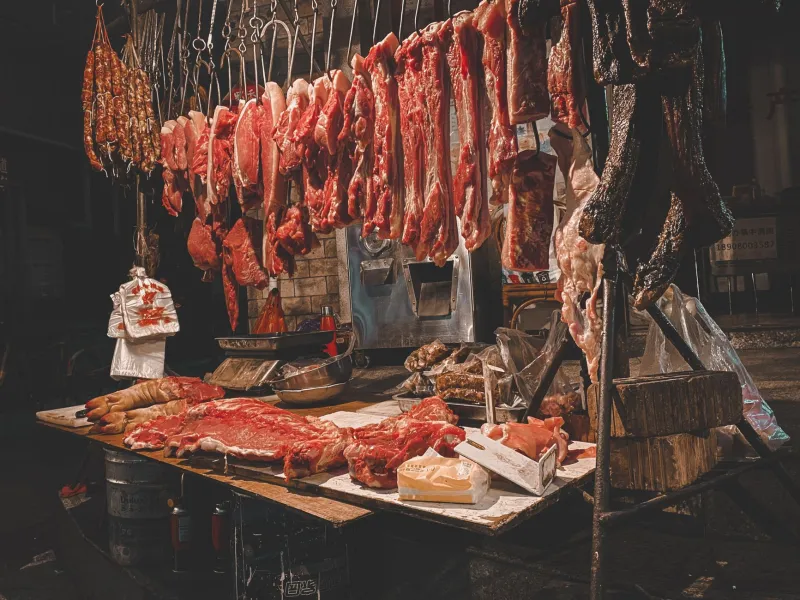
The good news — and there is some, so stick with us — is that the traditional cure hasn't died entirely. It's just been pushed to the margins, where it quietly gets on with being excellent while the supermarket stuff takes up seventeen metres of chiller space.
Independent butchers who cure their own bacon still exist in most towns, though you may have to actually look for them rather than just stumbling in on the way to the car park. What they offer is categorically different: rashers cut to order, properly cured over proper time, from pigs whose breed and provenance they can usually tell you about without having to check a clipboard.
"People come in and they'll say the bacon tasted different this week," says Karen Marsh, who runs a butcher's shop in North Yorkshire with her husband. "And I'll say yes, because this week it was a Gloucester Old Spot and last week it was a Tamworth. The breed matters. The feed matters. The cure matters. None of that fits on a supermarket label, so it just gets ignored."
Breed matters more than most people realise. The heritage pig breeds — your Gloucester Old Spots, your Middle Whites, your British Lops — carry fat differently, develop flavour differently, and respond to the cure differently. They're slower to rear and more expensive to produce. They're also, not coincidentally, the ones that taste like the bacon your grandad used to bring back from the butcher on a Saturday morning.
The Fry-Up Deserves Better
This isn't just about flavour, though it is very much about flavour. It's about what bacon is supposed to do in the context of the full English — a dish that, as we've argued on these pages before, doesn't need reinventing, just defending.
A proper rasher holds its own against a fried egg. It provides the savoury backbone that ties the plate together. It gives you something to mop sauce with, something to fold into a bread roll, something that justifies the whole enterprise. A watery supermarket rasher just lies there, contributing nothing, taking up space that could have gone to a second sausage.
The fry-up is a load-bearing structure. Bacon is one of the main supports. When the bacon is rubbish, the whole thing shifts.
Where to Go From Here
The answer isn't complicated, even if it requires a bit more effort than lobbing a plastic tray into the trolley. Find a butcher. Ask about the cure. Ask about the breed. Buy fewer rashers if you have to, but buy the right ones. The difference in price is less dramatic than the difference in quality, and once you've had a properly cured back rasher from a butcher who knows what they're doing, the supermarket alternative stops being an option and starts being an insult.
Bacon didn't forget its roots. We just stopped asking where it came from.