No Frills, All Thrills: The Greasy Spoon and the Breakfast It Does Better Than Anyone
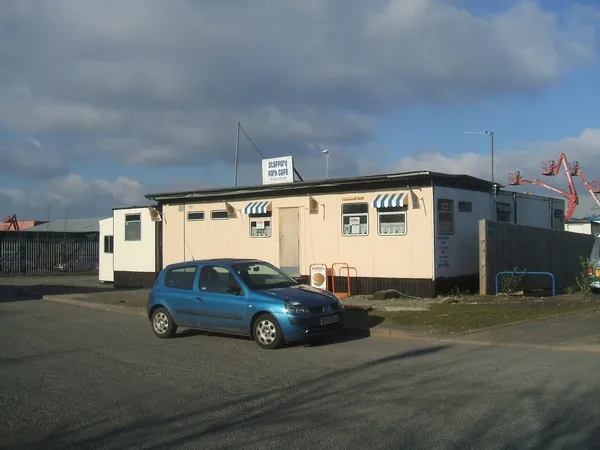
Photo: John M, CC BY-SA 2.0, via Wikimedia Commons
There are two types of people in this world. Those who queue outside a restaurant serving shakshuka on sourdough with a side of micro-herbs, and those who know better. The second group — the sensible ones — are already halfway through a mug of builder's tea in a place with steamed-up windows, wipe-clean tablecloths, and a laminated menu that hasn't changed since 2003. God bless them, every one.
The British greasy spoon is not a relic. It is not quaint, it is not ironic, and it certainly doesn't need reimagining by a chef who spent three months in Copenhagen. It is a living, breathing institution — a place where breakfast is taken seriously precisely because nobody makes a fuss about it. And it is doing things with eggs, bacon, and bread that no Michelin-starred kitchen would dare attempt before noon.
Beyond the Full English
Here's the thing about the full English: it gets all the glory and none of the nuance. Everyone bangs on about the sausages, the beans, the tomato question (tinned versus fresh — we've had that row, we'll have it again). But the greasy spoon's real genius lies in everything adjacent to the full English. The stuff that doesn't make the tourist guides.
Take the bacon butty. Not the bacon sandwich — the butty. White bread, butter applied with conviction, back bacon cooked until the fat has gone properly crispy at the edges but the meat hasn't dried out, and either brown sauce or ketchup applied by the customer themselves. No chef's interpretation. No chipotle mayo. Just the thing itself, wrapped in a paper napkin, handed over a counter by someone who's been awake since five. That is craft.
Or consider the egg on toast — two words that contain multitudes. At a proper café, this means a fried egg with a yolk that runs when you cut it, cooked in enough oil that the white has those slightly crispy, lacy edges, served on white toast that has been buttered while hot so it soaks in. Getting this wrong is easy. Getting it right, consistently, at seven-thirty in the morning for forty covers, requires genuine skill that nobody ever thanks you for.
The Regional Variations Nobody Talks About
Once you start looking, breakfast Britain is a patchwork of fierce local loyalties and quietly brilliant regional quirks.
In the North East, you'll find the stottie cake — a dense, doughy round loaf used as the vessel for bacon and egg in a way that makes a standard roll feel like a polite suggestion. In Scotland, the morning roll (a soft, floury bap with a slightly chewy crust) is essentially load-bearing architecture for a slice of lorne sausage — that square, sliced affair that fits the bread perfectly and has never once tried to be anything other than what it is. Respect.
Down in the Midlands, the egg and chips breakfast is an entirely legitimate order and anyone who tells you otherwise has never been properly hungry. In Wales, laverbread — made from seaweed, fried in oatmeal, and served alongside bacon — turns up on café menus in Cardiff and Swansea with the confidence of something that knows exactly what it is and doesn't care if you've never heard of it.
And in London, the café culture is its own thing entirely: a multi-generational, often family-run operation where the menu might not have changed in thirty years, the prices are still somehow reasonable, and the owner knows your order before you've sat down.
A Word From the People Who Actually Know
Maureen has been running her café in Stockport for twenty-six years. The sign outside says "M's Café." The sign inside says "No laptops. No nonsense." She starts at five-fifteen every morning and hasn't taken a full week off since 2011.
"The secret to a good fried egg," she says, without looking up from the pan, "is patience and hot fat. People rush eggs. You can't rush eggs." She tilts the pan slightly to baste the yolk with oil. "I've had people come in here and tell me they've had better eggs somewhere fancy. I say good luck to them. They always come back."
In Bristol, Terry has been frying bacon at the same griddle since he took over from his dad in 1998. His rule for bacon is non-negotiable: back bacon, smoked, cooked on a dry griddle — no oil — until the fat renders and crisps. "Wet bacon is an insult," he says cheerfully. "If it's steaming, it's wrong. Simple as that."
Both Maureen and Terry share one philosophy: breakfast food does not benefit from complication. The fewer the ingredients, the more important it is to treat each one properly. This is not laziness. This is discipline.
The Timing Is Everything
What the greasy spoon understands — and what the brunch brigade consistently fails to grasp — is that breakfast is a logistical operation. When someone orders a full plate, every component needs to land simultaneously and at the correct temperature. Beans that arrive cold while the sausages are still sizzling is not a minor inconvenience. It is a failure of planning.
The great café cooks carry a mental map of every item's cooking time and work backwards from the moment the plate needs to leave the pass. Toast goes down last. Eggs go in when the sausages have three minutes left. Beans go on low heat early and stay there. The tomato — if you're doing one — gets a quick blast in the pan and no more. This is choreography. It just doesn't come with a tasting menu or a write-up in the Guardian.
Why It Survives
Every decade brings a new food trend that's going to change how Britain eats breakfast. In the nineties it was the continental spread. In the noughties, the hotel buffet. In the twenties, it's grain bowls and cold brew. And every decade, the greasy spoon absorbs the noise and carries on.
It survives because it is honest. Because the prices are fair, the portions are real, and nobody is going to hand you a menu with a QR code and a paragraph about the provenance of the butter. It survives because at seven in the morning, after a night shift, before a long drive, or just on a grey Tuesday when you need something to go right, there is nothing on earth more reassuring than a plate of food cooked by someone who has been doing this longer than you've been having opinions about food.
The greasy spoon doesn't need saving, celebrating, or reinventing. It just needs you to turn up, order properly, and leave a decent tip for the person who got up before dawn to make sure your egg was exactly right.
They earned it.