Pork in Name Only: The Quiet Gutting of Britain's Favourite Banger
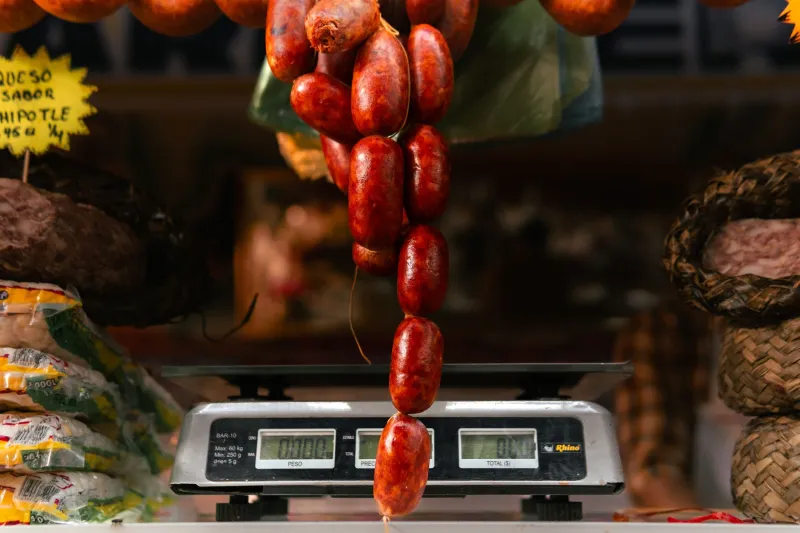
There is a particular kind of betrayal that happens quietly, over years, so gradually that you barely notice until you're standing in your kitchen staring at a pale, sweating sausage that's released half a cup of grey liquid into your frying pan and wondering when this became normal. The British banger — once an honest cylinder of seasoned pork and nothing to be ashamed of — has been systematically hollowed out, padded, watered down, and repackaged as something that resembles its former self only in shape.
This is the story of how it happened, who let it happen, and where you can still find a sausage worth the name.
When Did the Rot Set In?
The seeds were planted in the 1970s, when food manufacturing discovered that water, when bound cleverly enough, could be sold at the same price as meat. Add rusk — a dried bread filler that sounds almost wholesome — and you could stretch your pork content significantly without the customer noticing on first bite. The texture suffered, the flavour thinned, but the margins improved enormously.
By the 1990s, supermarket sausages had settled into a grim equilibrium. Labelling laws required that a sausage calling itself a "pork sausage" contain at least 42% pork. Read that again. Forty-two percent. The remaining 58% is, legally, anyone's guess — and some manufacturers have treated that ambiguity as an invitation.
The EU's 2003 regulations tightened things slightly, but the loopholes remained wide enough to drive a lorry of rusk through. "Pork" in the ingredients can include fat, skin, and connective tissue. Water is frequently the second or third ingredient. Stabilisers, diphosphates, and something called "pork protein" — which is not, as it sounds, a premium addition — round out the ensemble.
The Supermarket Shelf of Shame
We're not going to name specific products, because the legal team at Pig's Ear consists of one bloke who once watched a courtroom drama, but we will tell you what to look for on a label that should send you sprinting for the door.
If water appears before the seasoning in the ingredients list, put it down. If the pork content isn't stated as a percentage on the front of the pack, it's usually because the manufacturer isn't proud of the number. If the ingredient list includes more than six items and you can't pronounce three of them, the sausage has been engineered rather than made.
The budget tier — those multi-packs of twelve for under two quid — routinely hit pork contents in the low-to-mid forties. They're not sausages so much as pork-flavoured tubes of rusk and hope. They shrink on cooking, they spit aggressively, they leave behind a puddle of beige liquid, and they taste of very little except salt and a faint memory of pig.
Mid-range supermarket own-brands do better, often hitting 65–75% pork, but they still lean heavily on added water and stabilisers to hit their price point. The "premium" ranges — the ones with kraft paper packaging and artisanal fonts — are frequently 80% or above and taste noticeably better for it, though you're also paying for the font.
What a Proper Sausage Actually Contains
A traditional British pork sausage is, at its core, three things: meat, fat, and seasoning. The fat is not an embarrassment — it's structural. It keeps the sausage moist during cooking, carries the flavour, and stops the whole thing collapsing into a dry, mealy disappointment. Good butchers use a shoulder-to-back-fat ratio that's been refined over generations.
Rusk, in small quantities, is not inherently criminal. Traditional recipes have always used a little cereal filler to bind the mix and give the sausage a slightly yielding texture. The problem is dosage. A 5% rusk content is a seasoning; a 20% rusk content is an insult.
Water, similarly, has a legitimate role in small amounts — it helps the mix combine and prevents the sausage from being too dense. But when it's being used as a cheap volume extender, the sausage tells on itself in the pan. All that added water has to go somewhere, and it goes into your frying pan, where it steams the sausage rather than frying it and leaves you with a beige, flaccid thing instead of a properly browned banger.
The Butchers Who Still Bother
Here is where things improve considerably. Independent butchers across Britain — and there are still more of them than the high street's sorry appearance might suggest — are making sausages the old way, and they are not subtle about the difference.
A good butcher's sausage will typically run at 80–90% pork, seasoned with a house blend that might include sage, mace, white pepper, and a whisper of nutmeg depending on the region. They'll tell you the breed if you ask — Gloucester Old Spot, Tamworth, and Middle White all produce noticeably different fat profiles. They'll tell you where the pig came from. They'll probably have an opinion about natural versus collagen casings that you didn't ask for but will find yourself interested in anyway.
Markets are another reliable source. Farmers' markets in particular tend to attract producers who are making sausages because they care about them, not because they've found an efficient way to dispose of mechanically separated trim. The price is higher — you might pay £4–5 for six rather than £2 for twelve — but you are buying a different product entirely.
Regional specialities reward investigation. The Lincolnshire sausage, heavy with sage and coarsely ground, is protected by county pride if not by law. The Cumberland, with its pepper-forward seasoning and traditional coil form, is a geographical indication product with proper standards attached. These are benchmarks. Anything calling itself a Cumberland sausage must meet minimum requirements, and those requirements are considerably more demanding than the supermarket baseline.
How to Cook the Good Ones Properly
This is not, strictly speaking, a recipe, but a reminder: good sausages deserve respect in the pan. Low and slow. Never prick them — that's how the fat escapes and you end up with something dry. A medium heat, a little patience, and regular turning until the skin is an even, deep mahogany. No liquid. No lid. No rushing.
If you've spent the money on a proper butcher's sausage, the worst thing you can do is blast it on high until it splits and weeps. Treat it like the thing it is: a small, well-made product that took someone some care to produce.
The Bottom Line
The British sausage is not beyond saving. It hasn't gone the way of the dodo — it's just gone the way of the supermarket, which is a different kind of extinction: technically still alive, but hollowed out and glazed with a sell-by sticker.
Find your butcher. Ask what's in it. Pay a bit more. The pig that went into a proper sausage deserves better than to be stretched with water and rusk into something that weeps grey liquid at the first sign of heat. And frankly, so do you.