The Incredible Shrinking Plate: Britain's Restaurants Are Serving You Less and Charging You More
Picture the scene. You sit down at a gastropub you last visited three years ago, order the steak and ale pie that you remember with genuine affection, and wait. The plate arrives. Something is wrong. The pie is there, technically. It is pie-shaped. It occupies pie-adjacent space on the plate. But it is, unmistakably, smaller than you remember it. The mash is more of a suggestion than a portion. The gravy has been applied with what appears to be an eyedropper.
You say nothing, because you are British and this is not the sort of thing you make a scene about. But you notice. And you are not alone.
Plate shrinkflation — the restaurant industry's quiet cousin of the supermarket shrinkflation scandal — has been creeping through Britain's dining rooms for the better part of a decade. Unlike the packet of crisps that's now 20% air, a restaurant plate doesn't come with a weight printed on the back. There's no Trading Standards obligation to tell you that the shepherd's pie you're paying £16 for contains approximately 30% less shepherd than it did in 2015. So the industry has, largely, got away with it.
Until now. We've been paying attention.
The Evidence on the Plate
The mechanics of restaurant portion shrinkage are more subtle than simply making the food smaller. Chefs and operations managers — who are, to be fair, working under genuine financial pressure — have developed a sophisticated toolkit for reducing yield without triggering customer revolt.
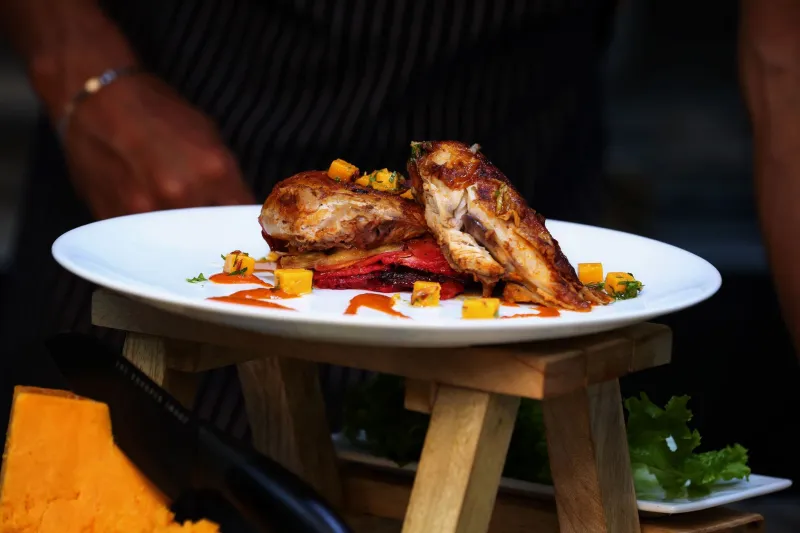
The most common technique is protein reduction. The chicken breast gets fractionally lighter. The lamb shank arrives with a slightly more modest taper. The burger patty drops from 6oz to 5oz, then quietly to 4oz, each step small enough to sit below the threshold of conscious complaint. Combine this with slightly deeper bowls (which look generous but hold less), artful plating that emphasises height over volume, and the strategic deployment of garnish to fill visual space, and you have a very effective system for charging more for less.
Side dishes have taken a particular battering. The chips that once arrived in a proper bowl — enough to share, enough to leave a few — now come in a small ramekin that barely constitutes a side. The seasonal vegetables, once a generous tumble of actual vegetables, have become a decorative cluster of three tenderstem broccoli and two cherry tomatoes, arranged as if for a still-life painting.
"I've been in the industry twenty years," says one head chef at a mid-market restaurant group who asked not to be named, presumably because they'd like to keep their job. "The pressure on plate cost is relentless. Every quarter, someone from finance is looking at your food cost percentage and asking where you can trim. It's death by a thousand cuts — literally."
The Costs Are Real. The Solutions Are Debatable.
Before we get too righteous, it's worth acknowledging that the restaurant industry has had a genuinely horrible few years. Energy costs doubled. Ingredient inflation ran ahead of general CPI for an extended period. The post-Brexit labour market made staffing expensive and unpredictable. Business rates in many town centres remain punishing.
Restaurant owners will tell you — and several did, when we asked — that the choice is often between reducing portions and closing the doors entirely. "People will accept a slightly smaller plate," says Donna Hartley, who runs a well-regarded pub restaurant in Cheshire. "They won't accept a 40% price rise. So you find a middle path."
This is honest, and it deserves some credit. But it also assumes that customers have no right to know that the middle path has been taken. The transparency problem is real: when a menu lists "steak and kidney pudding with mash and greens" at £18.50, it tells you nothing about how much pudding, how much mash, or how much in the way of greens you're actually getting. You're buying a vibe as much as a meal.
The Dishes That Have Suffered Most
Not every dish has been equally squeezed. Some have been hit harder than others, and it's worth knowing which ones to approach with scepticism.
The Sunday Roast has been a particular casualty. The number of roast potato slices has drifted downward across the industry. The meat portion — once sliced generously tableside, now pre-plated in the kitchen where nobody can see — has contracted. Yorkshire puddings, once enormous and structural, have in many establishments become decorative accessories.
The Pie has suffered in a different way. The pastry-to-filling ratio has shifted, with some establishments serving what is essentially a thick pastry lid atop a small ramekin of filling — technically a pie, but only in the way that a hat is technically clothing.
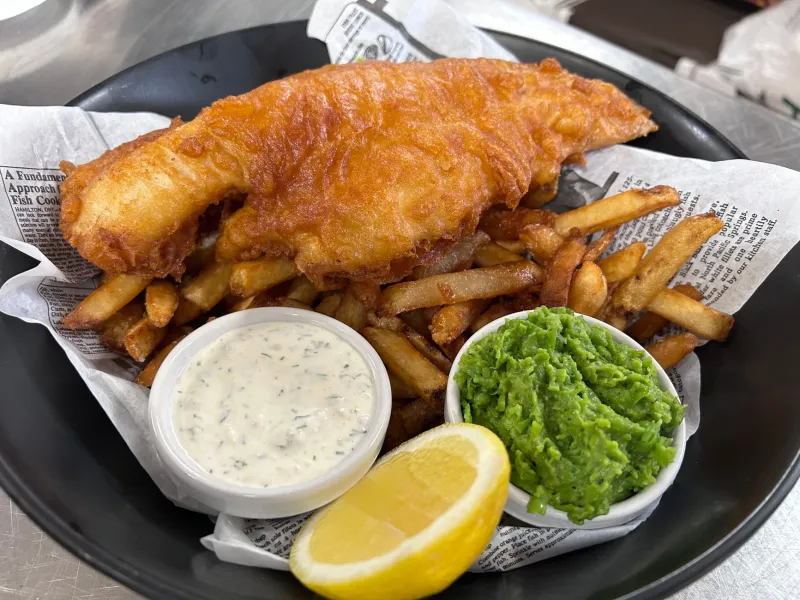
The Fish and Chips — and this is a personal affront — has seen the fish fillet shrink while the batter has, paradoxically, expanded. More coating, less fish. It is a kind of culinary sleight of hand that deserves its own criminal category.
Who's Still Doing It Properly
Here's the good news: there are establishments across Britain where nobody has touched the portions, where the plate still arrives looking like a plate of food rather than a plate of food's smaller, more photogenic cousin.
You'll find them, generally, in places where the owner is also the cook — where there's no operations director running food cost spreadsheets, just someone who takes personal pride in not sending a customer away hungry. Many are in the north, where the cultural expectation around portion size remains robustly, unapologetically generous. Some are old-school London institutions that have survived long enough to have a reputation worth protecting.
The tell is simple: look at the menu prices. If a main course is under £14 and the establishment appears to be solvent, there's a decent chance they're making it work through volume and efficiency rather than portion reduction. If you're paying £22 for a bowl of pasta, you are entitled to ask whether the pasta is structural or ornamental.
What You Can Do About It
The nuclear option — and we say this with full sincerity — is to ask. "Is this a good-sized portion?" is a perfectly reasonable question to put to a server before you order. A good restaurant will answer honestly. A less good one will describe it as "hearty" or "generous" using the precise tone of voice that means neither.
Beyond that: leave honest reviews. Mention the portions. Not in a demanding way, but factually. "Lovely flavours, portion on the small side for the price" is useful information for other diners and, if enough people say it, useful information for the kitchen too.
The plate, in the end, is a statement of intent. A full one says: we want you to leave satisfied. A half-empty one, dressed up with microherbs and a smear of jus, says something rather different. We think you know which one we prefer.