Crimped, Conned, and Sold a Duffer: The Slow Erosion of Britain's Most Famous Pasty
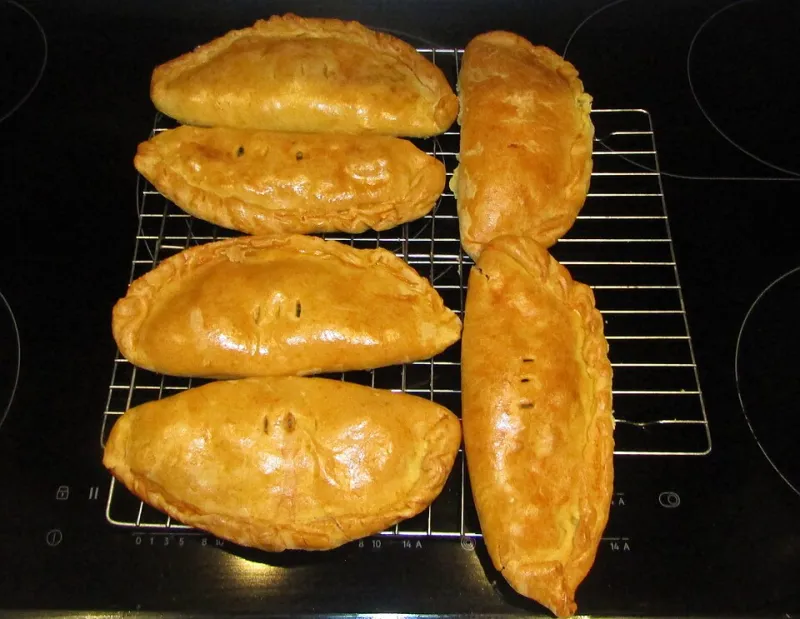
Photo: Kolforn (Kolforn) I'd appreciate if you could mail me ([email protected]) if you want to use this picture out of the Wikimedia project scope. This file is licensed under the Creative Commons Attribution-Share Alike 4.0 International license. Yo
Let's be honest about something. The Cornish pasty is one of the great achievements of British food. A D-shaped parcel of shortcrust pastry, packed with beef skirt, swede, potato, and onion, crimped along the top edge, baked until golden, and eaten with two hands while standing up and slightly windswept. It is, by any reasonable measure, a perfect object. So why does the one you bought at the motorway services taste like a damp flannel filled with disappointment?
The answer is long, depressing, and involves a cast of characters that includes industrial bakeries, supermarket buyers, a well-meaning but toothless piece of EU legislation, and — most gallingly — quite a few operations in Cornwall itself that really ought to know better.
What Makes a Pasty a Pasty
Before we get stuck in, let's establish the baseline. The Cornish Pasty Association, which exists and is exactly as serious as it sounds, has a set of rules. The filling must contain beef skirt or chuck steak, potato, swede, and onion. It must be seasoned with salt and pepper. The ingredients go in raw. The crimping goes on the side, not on top. And crucially, the whole thing must be made in Cornwall.
In 2011, the Cornish pasty was awarded Protected Geographical Indication status — PGI — by the European Union, a designation it retained post-Brexit. In theory, this means that anything calling itself a Cornish pasty must be produced within the county and meet those ingredient standards. In theory.
In practice, PGI status is a bit like a 'No Cycling' sign on a towpath. Technically enforceable. Largely ignored.
The Problem With Protection
The PGI rules cover geography and ingredients, but they say remarkably little about quality. They don't specify how much beef has to be in there. They don't set a minimum ratio of filling to pastry. They don't prevent a manufacturer from using the cheapest possible cut of beef, the most watery swede, and a pastry case thin enough to read through, so long as the whole sorry affair was assembled somewhere west of the Tamar.
The result is a two-tier market that is, frankly, a postcode lottery with a crimp on top. Drive through Bodmin or Truro and you'll find pasties ranging from the sublime — proper chunks of beef, waxy potato that holds its shape, swede with actual flavour, pastry that shatters rather than bends — to the sort of thing that looks the part in the window but collapses into a grey puddle the moment you bite into it.
And then there's everything outside Cornwall. The pasties you find in service stations, supermarket chiller cabinets, and high street chains that shall remain nameless. These are not Cornish pasties in any meaningful sense. They are pasty-shaped vessels for a filling that has more in common with tinned dog food than anything a Cornish miner's wife would have packed for a shift down the Dolcoath.
Who's Still Doing It Right
They exist. You have to look, and sometimes you have to queue, but the proper article is out there.
In Padstow, there's a bakery — small, no frills, the kind of place with a handwritten menu and a glass cabinet that steams up by half nine in the morning — where the pasties come out of the oven at ten and are gone by noon. The beef is skirt, cut chunky. The swede is yellow and sweet. The pastry is short and sturdy, the sort that holds its structural integrity even when you're eating it leaning against a harbour wall with a gale coming off the Atlantic. The crimp is thick and rope-like, done by hand, and the whole thing weighs what a pasty should weigh: enough to feel like a meal, not a snack.
In Redruth, there's a family operation that's been going since the 1970s, run by the kind of woman who looks at you slightly pityingly if you ask whether the beef is fresh. Of course it's fresh. The potatoes are local. The swede comes from a farm twenty minutes away. She charges what she needs to charge and not a penny more, and the result is a pasty that makes you briefly emotional in a way that is entirely appropriate.
These places exist. They are not hard to find if you're in Cornwall and you're paying attention. What they are is increasingly outnumbered.
The Cost-Cutting Creep
The pressure is economic and it's relentless. Beef skirt — the traditional cut, taken from the underside of the animal, tough but full of flavour when slow-cooked inside a pastry case — costs more than the minced beef or reformed meat that some producers quietly substitute. Swede takes longer to cook evenly than, say, a blander root vegetable bulked out with cheaper filler. Proper shortcrust pastry, made with butter or lard, costs more and handles less forgivingly than the margarine-based stuff that industrial lines prefer.
So corners get cut. Fillings get wetter, blander, more uniform. Pastry gets thinner and chewier. The crimp, once a point of pride and — legend has it — a handle for miners who'd eat the filling and discard the arsenic-contaminated end, becomes a mere decorative seal, barely holding the whole thing together.
The worst offenders aren't even pretending anymore. There are products on supermarket shelves labelled 'Cornish-style pasty' — note the 'style' — which have clearly been made somewhere in the Midlands and contain beef of uncertain provenance, a filling that is more gravy than solid matter, and a pastry case that goes soggy within minutes of opening the packet. These are not pasties. They are a legal fiction wrapped in foil.
Why It Matters
You might think this is all a bit precious. It's a pasty. Get a grip.
But here's the thing. The Cornish pasty isn't just a food. It's a piece of working-class culinary engineering, designed to feed people doing hard physical labour, robust enough to survive being carried down a mine, nutritionally complete, and genuinely delicious when made properly. It belongs to a tradition of British food that is practical, unfussy, and deeply good — the same tradition as the Melton Mowbray pork pie, the Forfar bridie, the Lancashire hotpot. Food that does exactly what it says on the tin, and does it brilliantly.
When that tradition is hollowed out by cost-cutting and replaced with a product that merely resembles the original, something real is lost. Not just flavour — though the flavour is lost too — but a connection to the people and the place that created it.
The Verdict
If you want a proper Cornish pasty, go to Cornwall. Find a small bakery with a steamed-up window and a short queue. Pay what they ask. Eat it outside, ideally somewhere with a view of the sea or a tin mine or both.
If you're buying one from a chain, a supermarket, or a motorway services, manage your expectations accordingly. You are not eating a Cornish pasty. You are eating a facsimile of one, produced at scale, priced for margin, and named after a place it has never seen.
The crimp is the giveaway. A proper pasty has a crimp that looks like it was made by human hands, because it was. What you've got there looks like it was applied by a machine that has never been to Cornwall and wouldn't know skirt beef from a spreadsheet.
There's your postcode lottery. And the prize, if you're lucky enough to find the real thing, is absolutely worth the journey.