Gone Before Breakfast: The Corner Bakery That Your High Street Quietly Forgot
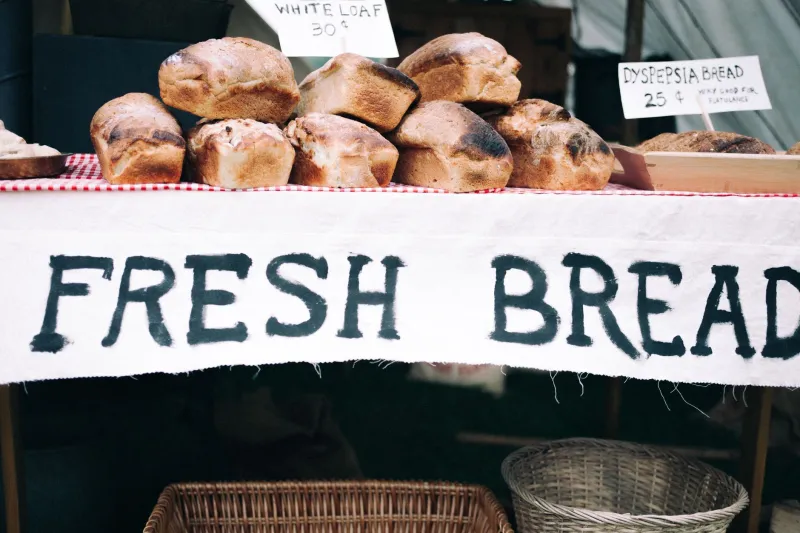
There is a particular kind of grief that doesn't announce itself. It creeps in slowly, over years, until one morning you realise that the thing you loved has simply ceased to exist — and you can't quite pinpoint the last time you saw it. The corner bakery is that kind of loss. No dramatic closure, no public outcry, no vigil. Just a shuttered shopfront, a new letting agent's board, and the faint, fading memory of warm bread at half past seven in the morning.
Britain has been losing its independent bakeries at an alarming rate for the better part of thirty years. The numbers are grim: according to industry estimates, the country has shed tens of thousands of small baking businesses since the 1980s. What replaced them? A supermarket in-store "bakery" that thaws par-baked rolls under fluorescent lights and calls it fresh. The cheek of it.
How the Supermarkets Pulled It Off
The story of how supermarkets killed the local bakery is not a complicated one, but it is a grubby one. It begins with scale. A large supermarket chain can negotiate flour prices, energy costs, and distribution in ways that a single-site bakery on a market town high street simply cannot match. The supermarket loaf arrives pre-sliced, pre-packaged, and priced to undercut. The corner baker, paying commercial rates on a lease and employing two or three staff, cannot compete on price alone.
But price wasn't the whole story. The supermarkets also rewired British shopping habits. The weekly big shop — a concept that would have been alien to your grandmother — gradually replaced the daily ritual of buying fresh. When bread is something you pick up alongside your washing powder and your frozen peas, the calculus changes entirely. Convenience wins. The corner bakery, which required a dedicated trip and operated on its own schedule, became inconvenient by comparison.
"The real killer was the car park," says Martin Fellowes, who ran a bakery in Shrewsbury for eighteen years before finally closing in 2019. "People stopped walking past. They drove to the retail park. And once you're in that car park, you're not nipping to the bakery on the corner."
Martin is not bitter about it, exactly. But he does use the word "gutted" several times over the course of a conversation, and you believe him.
What Was Actually Lost
Let's be precise about what the disappearance of the local bakery actually means, because it's more than sentimentality.
A proper independent bakery bakes to a daily rhythm. Bread comes out of the oven at a specific time. You can, if you're paying attention, arrive at exactly the right moment and buy a loaf that is still warm enough to melt butter on contact. That experience — tactile, aromatic, entirely unreplicable — is not available from a supermarket shelf. It never will be.
Beyond the sensory, there's the question of craft. Independent bakers make decisions about fermentation times, flour sourcing, and crust development that a centralised production facility cannot accommodate. A good sourdough from a local bakery is a living document of the baker's knowledge and the local environment. A supermarket bloomer is an engineering exercise in shelf-life management.
And then there's the social dimension. The bakery was a community node — a place where you knew the person behind the counter, where you could ask for the heel of the loaf if that was your preference, where the transaction involved actual human conversation rather than a self-checkout machine telling you to place your item in the bagging area.
The Survivors
Not everyone gave up. Across Britain, a resilient cohort of independent bakers has found ways to survive — and in some cases, to thrive — against the odds.
The most successful have done so by refusing to compete on supermarket terms. They've gone upmarket, or hyper-local, or both. Bakeries in places like Totnes, Stroud, and Edinburgh's Stockbridge neighbourhood have built loyal customer bases around sourdough, heritage grain varieties, and the kind of transparent provenance story that the industrial loaf can never offer.
"We don't try to be cheap," says Ailsa Drummond, who bakes out of a small unit in Inverness and sells primarily through a Friday morning market stall and a weekly subscription box. "We try to be irreplaceable. There's a difference."
Ailsa's bread is made with grain milled thirty miles away. Her sourdough starter is twelve years old. She knows the name of the farmer who grew the wheat. That story has value — not to everyone, but to enough people to keep the lights on.
Elsewhere, a new generation of micro-bakeries has emerged, often operating from domestic kitchens or small units on industrial estates, selling through social media and local farmers' markets. They are not the corner bakery of memory — they don't have a shopfront you can wander into at half seven — but they represent a genuine alternative to the supermarket monoculture.
The Morning Ritual, Reconsidered
There's an argument — and it's not an entirely mad one — that the British public is partly to blame for the bakery's decline. We voted with our feet, decade after decade, choosing convenience over craft. We accepted the par-baked roll. We bought the sliced white without asking questions.
But something is shifting. The pandemic, for all its horrors, produced a nationwide surge in home baking that reacquainted a generation with what proper bread actually tastes and smells like. Many of those people subsequently went looking for the real thing and found, to their delight, that independent bakeries still existed — you just had to seek them out.
The corner bakery of 1975 is probably not coming back. The economics are too brutal, the high street too hollowed out. But the spirit of it — the warm loaf, the human transaction, the bread made by someone who genuinely cares about bread — is alive in pockets all over the country.
You just have to go looking. And it's absolutely worth getting up early for.