The Great Watering Down: What Happened to Proper British Milk
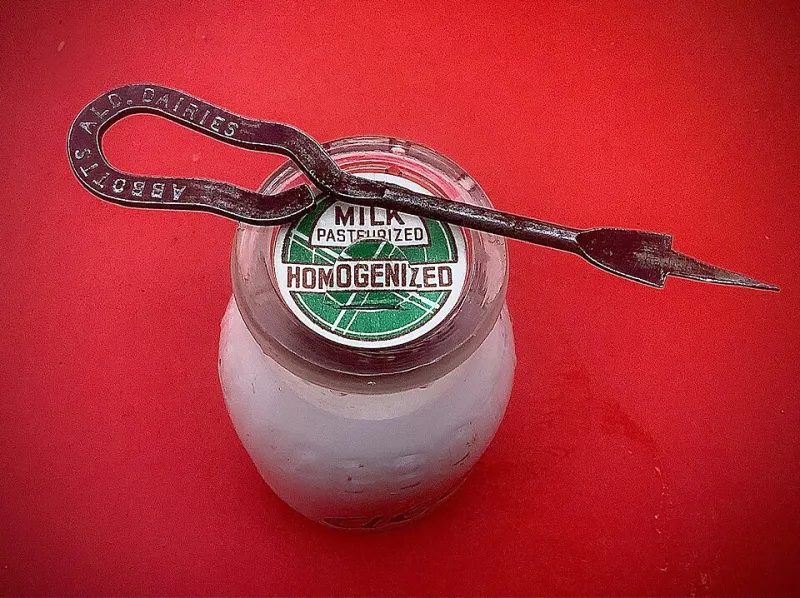
Photo: Bruce C. Cooper (uploader), CC BY-SA 4.0, via Wikimedia Commons
There's a moment — if you've ever stayed somewhere with a proper dairy nearby, a farm shop that bottles its own, or a B&B run by someone who still cares — when you pour milk into your tea and stop. You look at it. Something's different. The colour's wrong, in the best possible way. It's yellow. Slightly, warmly, unmistakably yellow. And your tea goes the colour tea is supposed to go.
That's what milk used to taste like. All of it. Everywhere. And then, gradually, without anyone quite announcing it, it didn't anymore.
When Did Full-Fat Become a Dirty Word?
The slow dilution of British dairy didn't happen overnight, and it wasn't a single villain's doing. It was a committee job — the worst kind. Through the 1980s and into the 1990s, the low-fat dietary gospel spread across the country like margarine on a cold slice of Hovis. Semi-skimmed became the responsible choice. Skimmed became the virtuous one. Full-fat, meanwhile, got quietly shoved to the back of the fridge, behind the cottage cheese nobody wanted, wearing the expression of a man who's been told his services are no longer required.
The irony, of course, is that the science behind all that fat-phobia has since been substantially revised. The saturated fat panic that drove millions of Britons to pour thin, bluish liquid into their cornflakes was, to put it charitably, premature. But the habits stuck. The infrastructure followed the habits. And by the time anyone thought to look back, the full, creamy, gloriously fatty milk that had underpinned British cooking for centuries had become something of a niche product.
Standardisation: The Enemy of Character
Here's the thing nobody tells you about modern milk: it's not actually natural. Not in the way it used to be. What comes out of your standard plastic two-pinter has been homogenised — which means the fat globules have been mechanically broken down and redistributed so the cream can't separate. It's uniform. It's stable. It's consistent. It's also, if we're being honest, a bit dull.
Before homogenisation became standard practice in the UK, milk had character. A pint from a Jersey herd tasted different from a Friesian pint. Devon cream was not the same creature as the stuff you'd get in Cheshire. Regional dairy had regional identity, in the same way that regional cheese still does — or at least still should. The fat content varied with the season, with what the cows were eating, with the land they were standing on. It was alive, in the loosest and most delicious sense of the word.
Standardisation killed all that. Not maliciously, but efficiently. The supermarkets wanted consistency. The big processors wanted volume. And the small creameries — the ones that gave a damn about which field their cows were in — couldn't compete on price, so they quietly disappeared.
Why Gran's Custard Set and Yours Doesn't
If you've ever made custard from scratch and wondered why it refuses to behave the way you remember it behaving when someone else made it decades ago, here is your answer: the milk was different. Richer. Fatter. More cooperative.
Proper custard — the kind that coats the back of a spoon and means business — relies on fat and protein working together with egg yolk under gentle heat. Thin milk, with its diminished fat content, gives you a thinner result. It's not your technique. It's not your eggs. It's the milk. Same goes for rice pudding that won't go creamy, bread sauce that tastes of nothing, and white sauce that slides off the pasta like it's embarrassed to be there.
British cooking is built on dairy in a way that's easy to underestimate. It's not just the obvious stuff — cream in the pudding, butter in the pastry. It's the background richness that holds everything together. When the milk goes thin, the whole kitchen gets a little less confident.
The Survivors Doing It Properly
The good news — and there is good news, because this is Pig's Ear and we're not here to leave you staring into a watery abyss — is that proper dairy never entirely disappeared. It just got harder to find.
A handful of dairies across Britain have held the line. Hook & Son in East Sussex have been doing raw, unhomogenised milk for years, with the kind of flavour that makes you want to ring someone up and tell them about it. Acorn Dairy in County Durham runs an organic operation with a direct delivery round that would make your milkman grandfather misty-eyed. In Somerset and Devon, there are still small creameries turning out double cream with enough body to stand a spoon in. These places exist. They're not relics. They're businesses, and they'd quite like your custom.
Farmer's markets are another reliable port of call. Many small-scale dairy farmers who can't access supermarket contracts sell directly, either at markets or through local box schemes. The milk they're selling is often unhomogenised, sometimes organic, and frequently from breeds — Jerseys, Guernseys, Ayrshires — specifically kept for the quality of their milk rather than sheer volume. It costs more. Of course it does. But so does eating properly, and that's a conversation worth having with yourself.
What We've Actually Lost
The real cost of all this isn't just flavour, though the flavour cost is real and significant. It's the erosion of something more structural: the connection between a specific piece of land, a specific herd, and what ends up on your table. That connection is what makes food mean something. It's what gives a region its culinary identity.
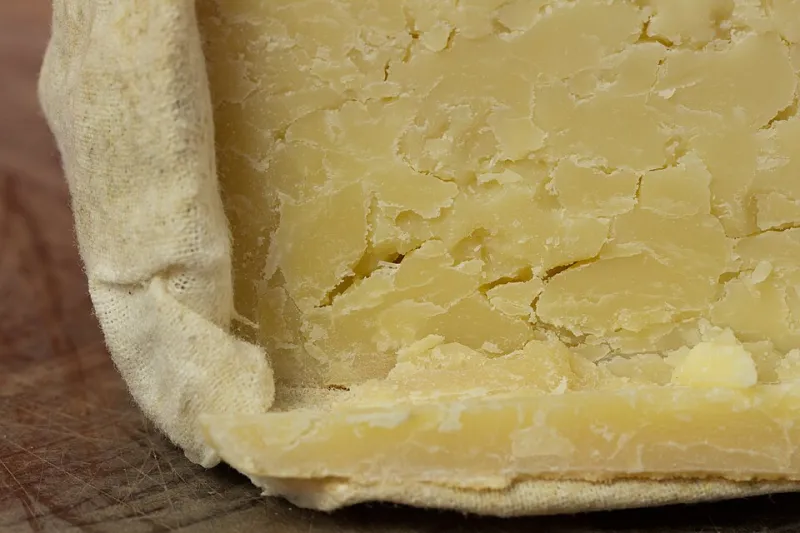
When every bottle of milk tastes the same regardless of whether it came from a Cornish valley or a Lincolnshire flatland, something important has been levelled out of existence. The same process that turned British Cheddar into a generic yellow block did the same thing to British milk — just more quietly, because milk doesn't sit on a shelf with a label you can read.
We lost the character. We lost the regionality. We lost the richness. And we did it in the name of convenience and a dietary panic that turned out to be largely unfounded.
Pour Yourself a Proper One
Next time you're near a farm shop, a farmers' market, or anywhere that sells milk from a named herd rather than a faceless processing plant, buy a pint. Full-fat. Unhomogenised if you can get it. Take it home and make tea with it. Or porridge. Or custard, if you're feeling ambitious.
Notice the colour. Notice the way the cream wants to sit at the top if you leave it a moment. Notice what your tea tastes like.
That's what we gave away. And it's not too late to want it back.