Pale Imitation: The Supermarket Egg Has Been Lying to Your Face for Decades
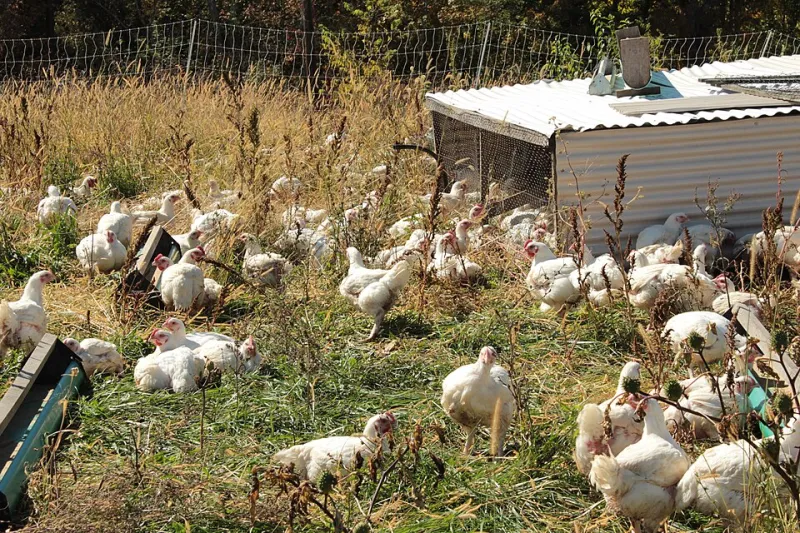
Photo: U.S. Department of Agriculture, CC BY 2.0, via Wikimedia Commons
There is a moment — and if you've experienced it, you'll know exactly what we mean — when you crack a genuinely good egg into a pan and stop dead. The yolk sits up proud, almost aggressively orange, like a small edible sunrise. You stare at it. You wonder, briefly, whether something has gone wrong. Then you taste it and realise, with a creeping sense of betrayal, that everything you've been buying from the supermarket chiller for the last twenty years has been a pale, watery lie.
This is not a niche concern for farmers' market enthusiasts or people who own their own chickens and won't shut up about it at dinner parties. This is about the quiet, systematic degradation of one of Britain's most fundamental kitchen staples — and the remarkable success with which the industrial egg industry has convinced an entire nation that its anaemic product is perfectly normal.
The Yolk Standard
Let's start with colour, because colour is where the con begins. A proper egg yolk — from a hen that has spent meaningful time outdoors, pecking at grass, insects, and whatever else takes her fancy — runs a deep, burnished amber. Sometimes it veers towards burnt orange. It has depth and richness to it. When you beat it into a custard or scramble it slowly in butter, it turns the whole dish golden.
The yolk from a mass-produced supermarket egg, even one wearing the word "free-range" on its box like a borrowed jacket, is often a thin, insipid yellow. It looks, frankly, like something that gave up halfway through becoming an egg. It doesn't stand tall in the pan. It collapses. It spreads. It tastes of very little.
The reason for this is not mysterious. Yolk colour is directly linked to what a hen eats. Birds with genuine outdoor access consume carotenoid-rich plants and insects, and those pigments go straight into the yolk. Hens that are technically classified as free-range but spend most of their lives crowded into a shed with a small flap at one end — which, legally, is all "free-range" requires in this country — eat a diet that is almost entirely composed of formulated grain feed. Some producers even add marigold extract or synthetic colourants to the feed specifically to bump up yolk colour without improving anything else. You are, in other words, sometimes looking at a cosmetically enhanced egg. The yolk has been made up to look more impressive than it is. A bit like a politician at a press conference.
What the Label Actually Means
Britain's egg labelling system is, to put it generously, a masterpiece of managed expectations. The Lion Quality mark tells you the hen was vaccinated against salmonella. The "free-range" label tells you she had theoretical access to outside space. Neither tells you how often she actually went outside, what the land looked like, how many other hens she was sharing it with, or whether the farmer gives a damn about the quality of what ends up on your plate.
The honest truth is that there is an enormous gulf between the best free-range eggs and the worst, and both can wear the same label. A small flock of hens on a mixed farm in Herefordshire, rotated across pasture and supplemented with kitchen scraps and forage, will produce eggs of an entirely different character to a 30,000-bird unit in a converted warehouse with a patch of compacted mud outside. Both are, by the letter of the law, free-range. One of them is producing something magnificent. The other is producing something the industry has trained you to think is fine.
A Visit Worth Making
Spend an afternoon with a small-scale egg producer — the kind who knows each flock by rotation rather than by number, who moves his hens regularly to let the land recover, who buys feed from a local mill and tops it up with whatever's going spare from the vegetable beds — and the difference becomes impossible to ignore. These are not boutique hobbyists. Many of them are working farmers running tight margins and doing things properly because they believe it matters, not because it's fashionable.
The eggs they produce have shells that feel different in your hand. Denser, somehow. More present. When you crack one, the white holds together rather than slumping across the pan in a thin, watery sheet. The yolk is the colour of a good sunset over the Peak District, and it tastes of something. Actual something. Rich, faintly savoury, with a depth that makes a scrambled egg on toast feel like a proper meal rather than a filling exercise.
You can find these people at farm shops, at good independent delis, at markets that haven't been entirely taken over by artisan candles and overpriced chutney. Some of them will deliver. None of them are as expensive as you've been led to believe, especially once you factor in the fact that you'll use fewer of them because they actually taste of what they're supposed to taste of.
The Breakfast Test
Here is a simple experiment. Buy a box of the cheapest eggs your local supermarket sells. Buy a box from a small producer — a farm shop, a market stall, somewhere where you can ask the person selling them what the hens actually eat. Fry one of each in the same pan, with the same butter, at the same temperature. Put them side by side on a plate.
The difference will be visible before you've taken a bite. One yolk will be pale and flat. The other will be deep, rounded, and golden. Then taste them. If you still think the supermarket egg is acceptable after that, fair enough — you've made an informed choice. But most people, when they do this test, don't go back. They just quietly rearrange their priorities and start buying their eggs somewhere different.
That's all this is, really. Not a lecture. Not a manifesto. Just a nudge to crack a better egg and see what you've been missing.
The Pig's Ear Verdict
Britain runs on eggs. Fried, scrambled, poached, boiled, folded into cakes and custards and Yorkshire puddings and a hundred other things that make this country's food worth eating. The egg is not a minor ingredient. It is foundational. And for decades, the industrial food system has been quietly replacing the real thing with a pale substitute and calling it progress.
It isn't progress. It's a con. A slow, low-level, entirely legal con that has succeeded largely because most people have forgotten what the original looked like.
Go find a proper egg. Crack it into a hot pan. Watch that yolk sit up and look you in the eye. Then ask yourself why you ever settled for anything less.