Jar Wars: How Britain's Pickle Shelf Became a Battleground
There was a time — not so long ago, mind — when the pickle situation in this country was perfectly settled. A squat jar of Branston sat on the table next to a wedge of Cheddar. A bowl of pickled onions appeared at Christmas, stabbed with a cocktail stick, smelling faintly of a dare. Nobody argued. Nobody wrote a Substack about it. Life was good.
Then something happened. The craft lot arrived, the farmers' markets multiplied, and suddenly every village fête was flogging a hand-labelled jar of "heritage piccalilli" at four quid a pop. The humble pickle — that vinegary, chunky, gloriously unglamorous British staple — became a cultural flashpoint. And now here we are, taking sides over condiments like it actually matters.
Spoiler: it does matter. Just maybe not in the way anyone expected.
Branston vs. Piccalilli: The Original Grudge Match
Let's start with the heavyweight bout. In one corner: Branston, the dark, sticky, sweet-and-savoury relish that has been gluing cheese sandwiches together since 1922. In the other: piccalilli, that lurid yellow tangle of cauliflower and mustard that looks like it was invented by someone who lost a bet.
Both are deeply, irreversibly British. Both belong on a proper ploughman's. And yet somehow, they've been drafted into opposing armies in a war of culinary identity.
Branston is the People's Pickle. It's in every supermarket, every motorway services, every sad desk lunch across the land. It's reliable, unpretentious, and it knows exactly what it is. Piccalilli, meanwhile, has been quietly repositioned as the choice of people who own Le Creuset and say things like "provenance." Which is deeply unfair on piccalilli, a condiment that has been knocking about in British kitchens since the eighteenth century and never once asked to be aspirational.
The truth is, they're not rivals. They're different tools for different jobs. Branston on a doorstep cheddar sandwich: non-negotiable. Piccalilli alongside a proper pork pie, ideally eaten standing up at a bar: equally correct. Anyone trying to make you choose is selling something.
The Pickled Onion Problem
If Branston and piccalilli are the generals of this war, the pickled onion is the foot soldier — overlooked, underappreciated, and absolutely essential.
For decades, the pickled onion asked for nothing. It sat in a massive jar on the pub bar. It appeared in a polystyrene tray next to battered cod without complaint. Children ate them on a dare. Grandads ate them with everything. It was a simple, honest arrangement.
Now, apparently, we have "artisanal pickled shallots" in "spiced malt vinegar with bay and thyme," available at twelve pounds for a jar the size of a cricket ball. And look, fine. Good for you. But when you're standing in a chip shop at half ten on a Friday night, you don't want a shallot with a backstory. You want a pickled onion that bites back.
The gherkin, for its part, has had a rather better decade. Largely imported, largely associated with burgers, the gherkin has successfully reinvented itself as something cool. Craft burger joints serve them in little ramekins. Cocktail bars muddle them into things that should not exist. The gherkin has done a PR job that the honest British pickled onion never needed — and frankly, still doesn't.
The Craft Pickle Insurgency
Here's where it gets complicated. Because the artisanal pickle makers — the ones with the brown paper labels and the Instagram accounts and the jars that require a degree in structural engineering to open — aren't actually wrong.
Some of them are brilliant. Small producers fermenting proper kimchi-style krauts, doing interesting things with damsons and walnuts, reviving old British pickling traditions that the big manufacturers quietly dropped when they decided shelf life was more important than flavour. That stuff deserves to exist. It deserves to be on tables.
The problem isn't the product. The problem is the attitude that sometimes comes with it. The implication that if you're still buying Branston from Tesco, you're somehow failing. That the correct pickle is one you can only find at a market that only runs on the third Sunday of the month, in a car park behind an artisan coffee roaster.
British food has spent decades being sneered at. The last thing it needs is its own devotees turning the sneer inward.
What the Chip Shop Knows That the Deli Doesn't
Step into any chip shop that's been trading for more than twenty years and you'll find a pickle hierarchy that nobody wrote down but everyone understands. Pickled onions: yes. Pickled eggs: absolutely, if you're brave. Gherkins: sometimes. Branston: not here, mate, this isn't a sandwich shop.
That unwritten knowledge — what goes with what, when, and why — is the product of generations of eating. It doesn't need disrupting. It needs respecting.
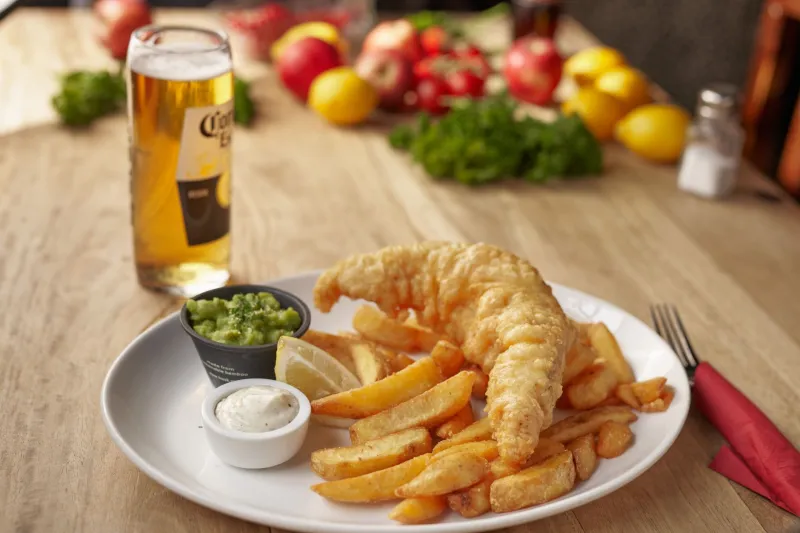
The chip shop doesn't care about trends. It cares about what works alongside a piece of battered haddock and a portion of chips wrapped in paper. That's a kind of wisdom that no amount of artisanal fermentation can replicate, because it was earned through repetition and feedback from people who just wanted their tea.
The craft pickle movement, at its best, is doing the same thing from a different direction — experimenting, refining, finding out what works. The two traditions aren't enemies. They just need to stop performing for different audiences.
A Modest Proposal for the Pickle Peace Summit
Here's what Pig's Ear suggests, free of charge and with no expectation of thanks.
Branston stays on the table. Non-negotiable. It earned its place and it's not leaving. Piccalilli gets the respect it deserves as a genuinely ancient British condiment, not a lifestyle accessory. Pickled onions are rehabilitated as the unsung heroes they are, and nobody is allowed to charge more than two pounds fifty for a jar of them. Gherkins can stay, but they need to stop being smug about it.
And the artisan lot? Keep doing what you're doing — the good ones are genuinely making Britain's pickle game stronger. Just maybe ease off the origin stories on the label. We don't need three paragraphs about the apple cider vinegar. We just need to know if it goes with cheese.
Because at the end of it all, a pickle is not a statement. It's a condiment. It exists to make the thing next to it taste better. The moment it starts trying to be the main event, something has gone badly wrong.
Pass the Branston.